No Roads No Problems
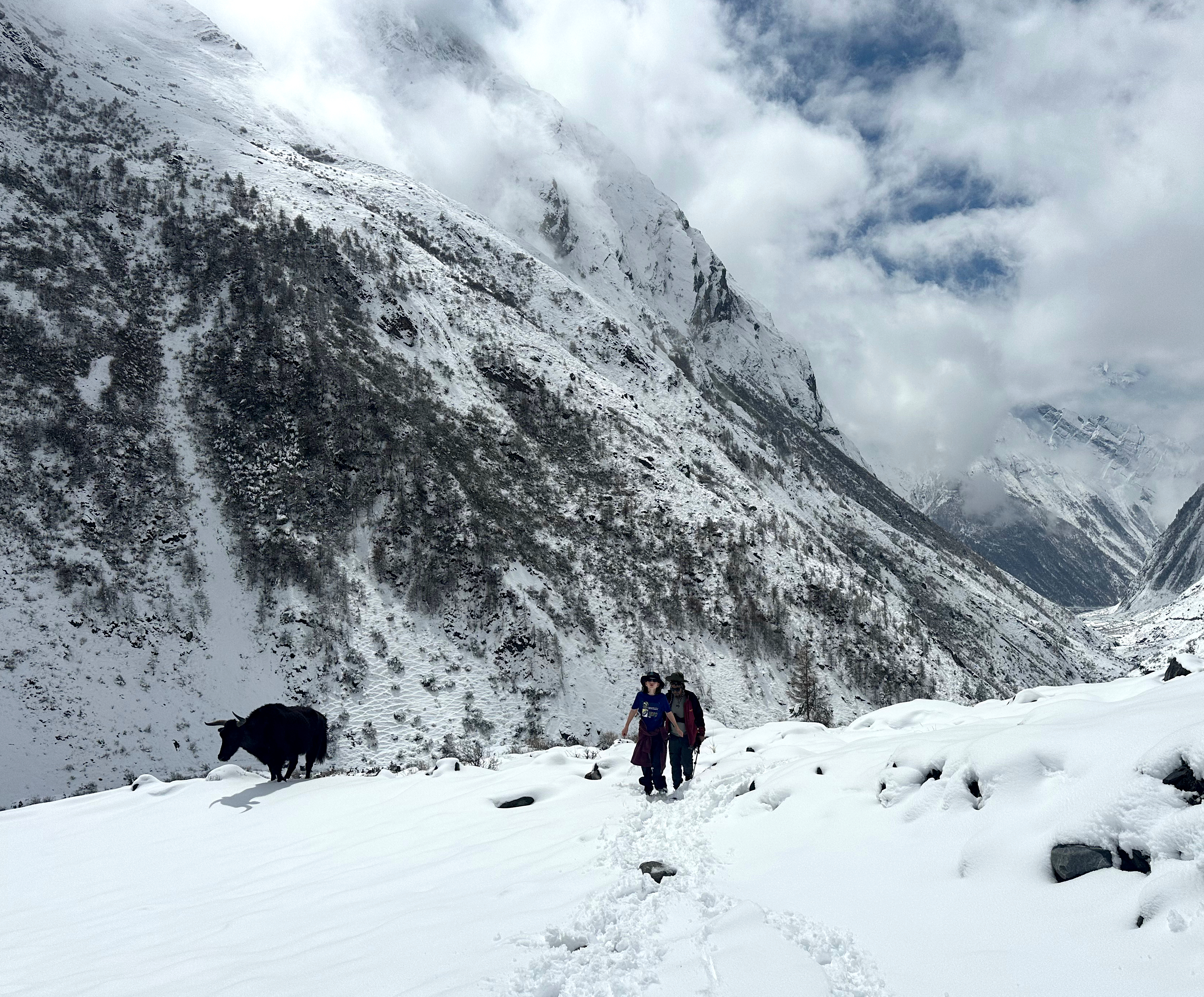
With their feet buried in a foot of snow, at 3,700 metres, Castlemaine's Monte and Finchley Macpherson reached their summit.
Walking slowly, pausing after each step to breathe, after 11 days of walking in the Nepalese mountains the pair had made it to their destination.
"That was the proudest moment," Monte says.
The father and son covered over 130 kilometres on their 11-day pilgrimage through Nepal's Himalayan foothills on the Tsum Valley Trail.
They walked through villages and rough terrain, frequently stopping for mules on thin sections of cliffside. It was their first international hike together. It was, by most measures, an extraordinary thing to do.
And for Finchley, it earned him something rather official: a certificate from the tourism authorities in Kathmandu declaring him the youngest tourist to have completed the full route. The certificate now sits on the mantelpiece at his mum's house.
"[The idea] probably came from me," Monte admits with a laugh. He had always wanted to do it, he says. And the timing felt right. Finchley was old enough to manage the distances but "hadn't quite hit that teenage age where he doesn't want to do anything with his dad."
Preparation was done locally; Monte and Finchley walked the Moonlight Flat forests.
"That was our only option, so we couldn't train for the altitude," Monte says.
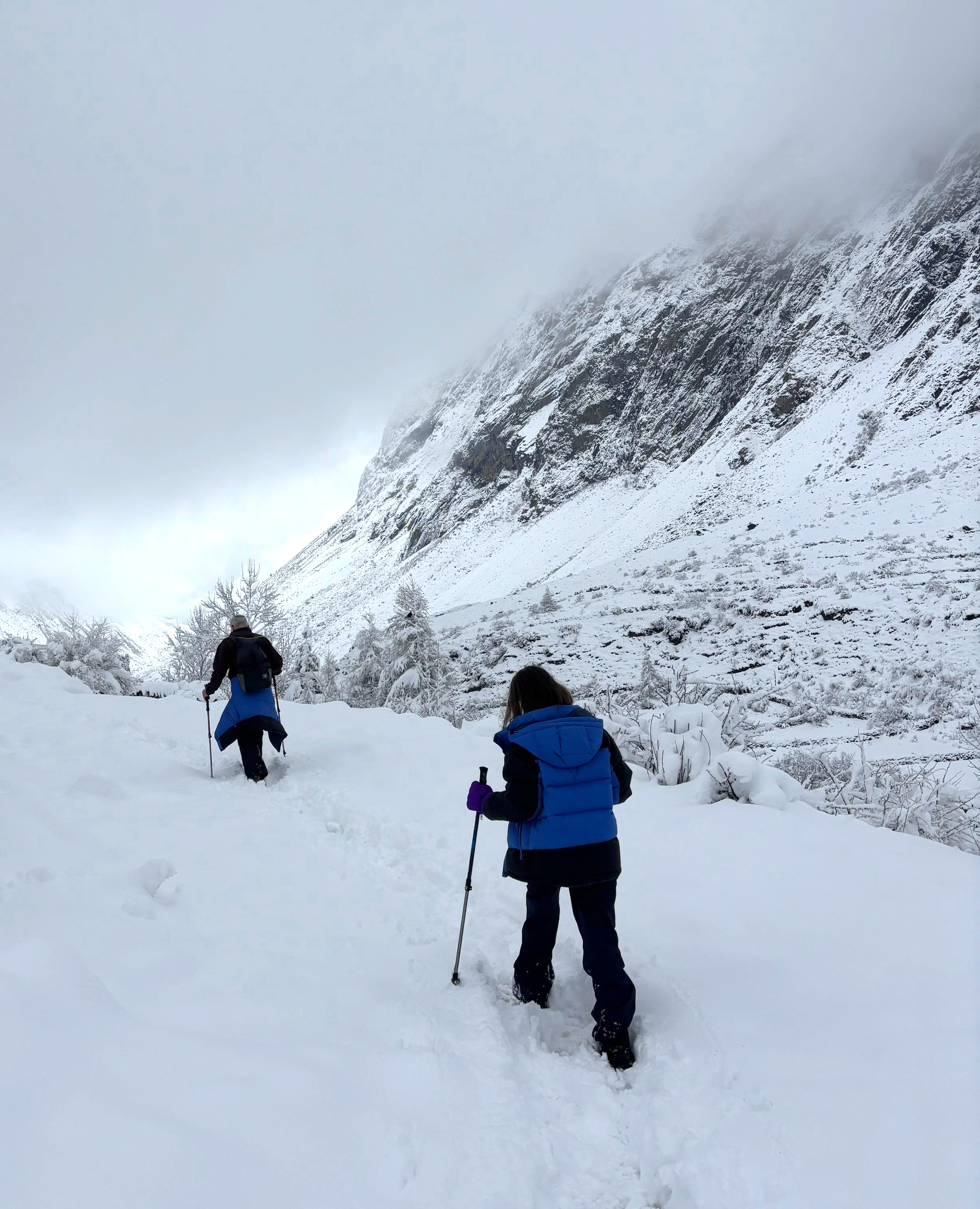
They weren't too badly affected by the altitude, until the day they were. The hardest days were at the very beginning, days two and three, filled with steep inclines and heavy descent, a repetition that would make anyone exhausted, especially a 12-year-old.
"There were a couple of moments when the poor kid collapsed to the ground in tears and just said he couldn't go on," Monte says.
"But by that stage we kind of had to, because there were no roads. You either continued or you lived there."
They walked with a local guide and a young porter who, each morning, would shoulder roughly half their gear and quietly disappear up the trail, reappearing at the end of each day.
For most of the journey, it felt like just the three of them, Monte, Finchley, and their guide.
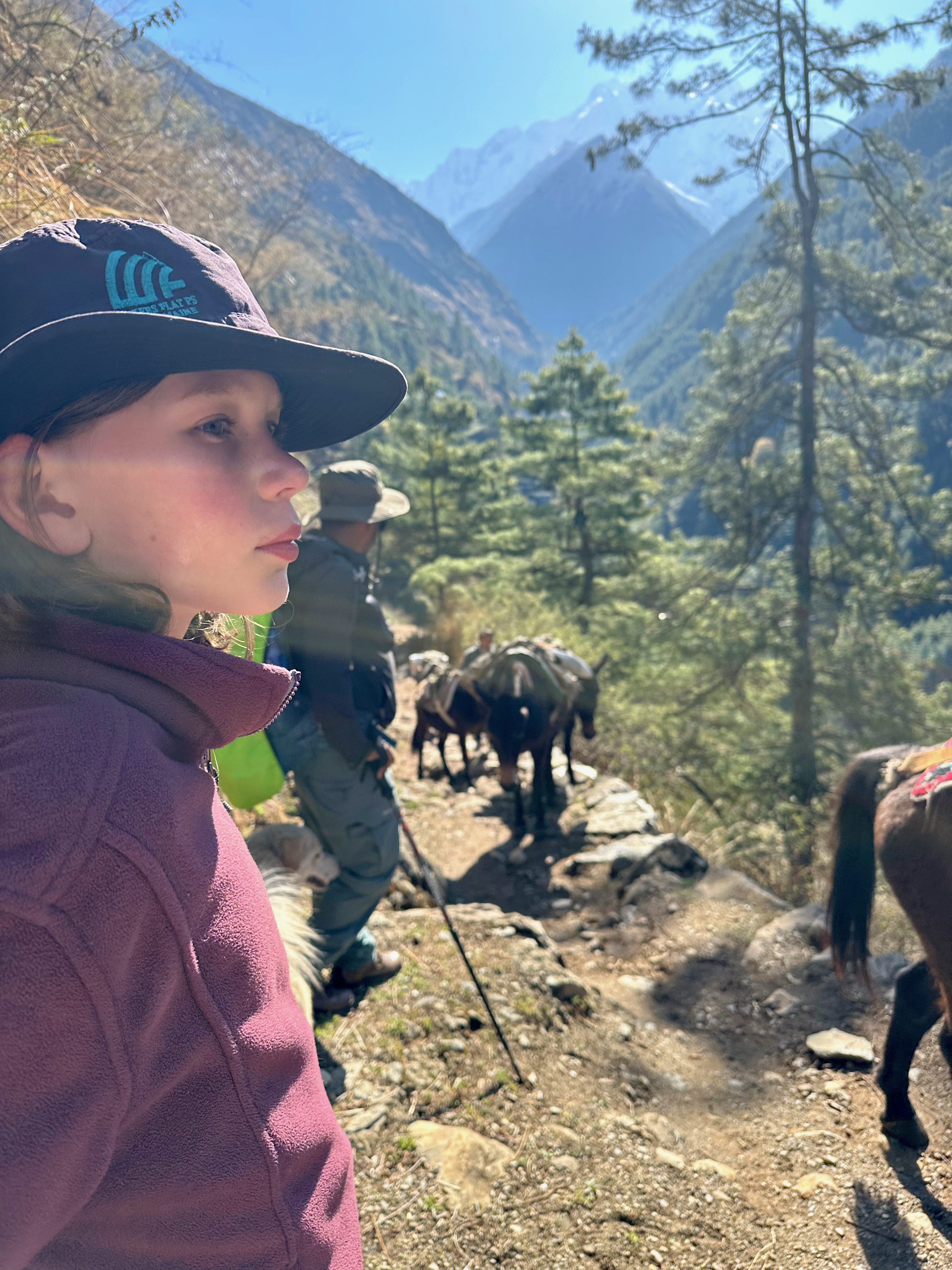
The lack of roads meant that mules were the primary transport method for goods along the trail. Dozens of them, sometimes more than 20 at a stretch, loaded with everything from sand to building materials to bolts of fabric, moving goods up and down the mountains. On the trails, sometimes no wider than a metre, and with a drop to one side, the sound of the mules' bells was a warning to get out of the way. You heard it, you pressed yourself against the cliff wall, and you waited because they'd push you off.
"I couldn't tell you the last time I went somewhere for 10 days and didn't see a road. It was pretty special."
Finchley's perseverance was unmatched after that day in the foot of snow at their highest point of elevation.
Finchley came down with a souvenir of his own, lips burnt in the snow, chapped and blackened, and yet he kept going.
Back in Castlemaine, Finchley shared his travels with his classmates.
For their next trip Monte has promised a pool. When pressed if there was another trek on the horizon, Finchley responds with a sharp "I hope not." Monte laughs, "Too soon," he says. "Too soon."